

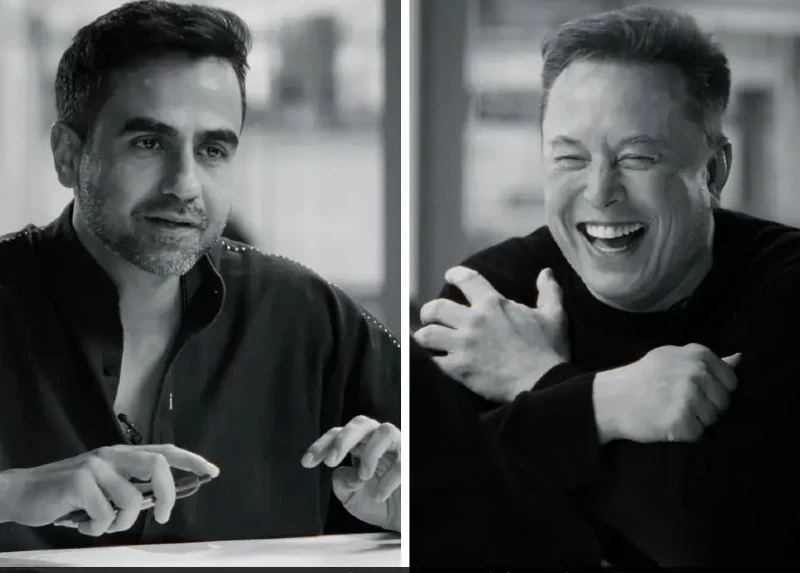
On Sunday, 30th November, the multi-billionaire and soon-to-be-trillionaire, Elon Musk, answered questions from his personal life to the future of jobs and technology in a podcast with Zerodha’s founder, Nikhil Kamath. The two entrepreneurs sat for a talk on the ‘people’ show by WTF.
During the podcast, Mush shared his views on the immigration policies in the US, the H-1B visa programme, his own family, including his children and partner, the tariff policies of the US president and also on the future of the market and jobs in the world moving towards AI advancement. Kamath has interviewed many important personalities, but the podcast with Musk is one of the most important moments of the billionaire’s career.
Among other things, the X and SpaceX CEO revealed that his partner Shivon Zilis is half-Indian and they have named one of their son, Shekhar, in honour of Indian Physicist and Nobel Laureate Subrahmanyan Chandrasekhar. Musk met his current partner Shivon in 2017 when she joined Neuralink, and the couple has four kids together named Arcadia, the twins Strider and Azure, and son Seldon.
Musk, who has a large family with 14 kids, jokingly said that “I am trying to get an entire Roman legion”, during the podcast. He also talked about the declining rate of fertility and how the world might see a decline in population if the rate continues. He also iterated that his idea of increasing human consciousness is about more people and not fewer. He also highlighted his bond with his kids when asked by Kamath, and said that it’s a beautiful feeling to witness a “little creature” love you and watch them grow up.
Commenting on the H-1B visa programme, he said that the US has benefitted immensely from the Indian immigrants, who are the largest beneficiaries of the programme, but also remarked that since the previous policies of leniency have led to exploitation of the programme, the fear has led to certain policy decisions by the Trump administration that threaten the labour security under H-1B.
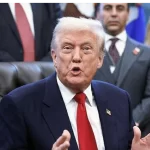
He also spoke about the tariff policies, and said that he was not in favour of the heavy tariffs, and tried to dissuade the President, but he had made it clear that he loves tariffs. He also told Kamath that he strongly believes that tariffs distort the market and hamper free trade, which is better. He took a bold stance on the future of jobs and said that working will be optional in less than 20 years due to robots and AI advancement. He also gave an important message to young aspiring entrepreneurs, saying that they should focus on contributing to society and not chasing money.