



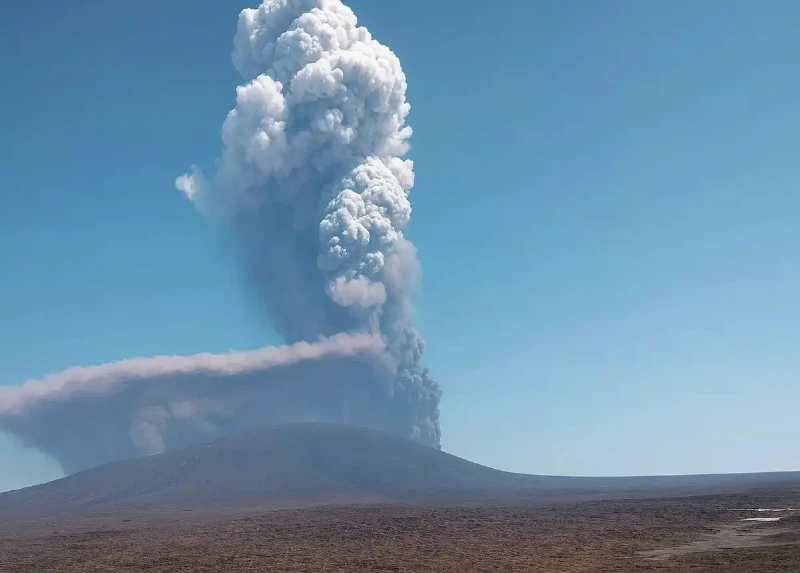
The Hayli Gubbi volcano, located in Ethiopia, erupted with violent ash clouds, which later reached India on 24th November. The volcano located in Ethiopia’s Afar region, 800 kilometres Northeast of Addis Ababa, which is also near the Eritrean border, erupted on 23rd November.
The volcano was considered dormant, and first erupted some 12,000 years ago. The eruption did not contain any lava, but fumes which went up to a height of 14 kilometres like a white pillar of material, causing intense smoke across continents, as confirmed by the Toulouse Volcanic Ash Advisory Centre. It crossed the Red Sea and the Indian Ocean to cone towards the Northern part of India around 11 pm on Monday.
The regions affected were Rajasthan, Delhi-NCR, Gujarat, Punjab, and Haryana. The smoke has raised concerns over the weather in the region. The Indian Meteorological Department(IMD) has stated that the smoke completely exited India at around 10:30 pm on Tuesday. The IMD has earlier stated that the volcanic fumes from the volcano have affected high-altitude aircraft.
A dozen flights were cancelled due to the ashes from the volcano. Air India cancelled 11 international flights, as per the guidelines of the aviation safety regulator of India. Akasa Air also cancelled flights going to cities in the Middle-east including Jeddah, Abu Dhabi, and Kuwait. An airport official also confirmed that many incoming flights arriving at the Indira Gandhi International Airport have been cancelled.
Turns out that the concerns regarding the impact on air quality are baseless, as authorities clarified that though the volcanic eruptions’ fumes affected aviation, they have not impacted the weather and pollution levels. In the Afar region, where the volcano, known to be dormant uptill now, has been affected, and medical help has been sent for the residents who were affected by the thick fumes.
Abedella Mussa, a health in-charge from Ethiopia, confirmed that two health teams were deployed to the affected neighbourhoods, including Nemma-Gubi and Fia.