

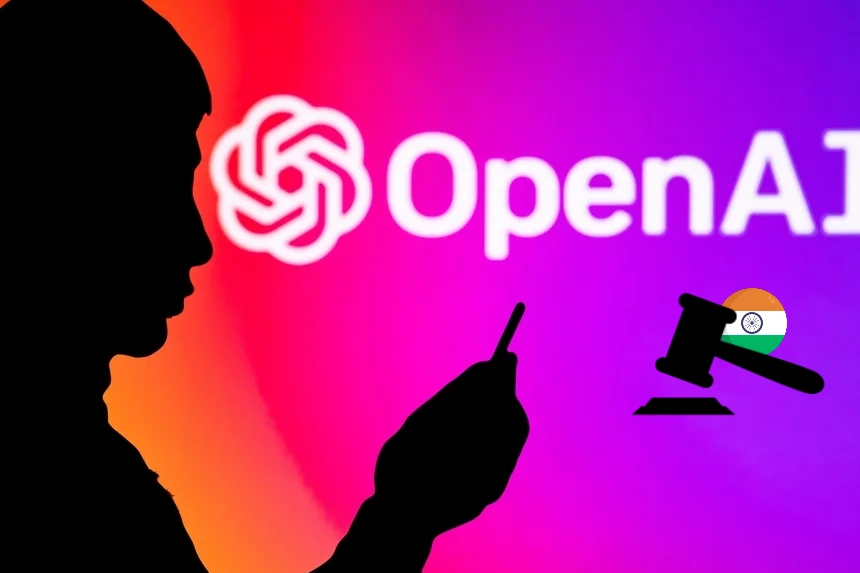
Indian book publishers, along with international publishing houses have sued OpenAI for copyright in the Delhi High Court. The lawsuit aims to prevent ChatGPT, a product of OpenAI, from accessing and using proprietary content without the required permission. Regarding copyright concerns, this is the most recent in a string of international legal challenges aimed at AI companies.
Major publishers, including Bloomsbury, Penguin Random House, Cambridge University Press, Pan Macmillan, Rupa Publications, and S. Chand and Co., are represented in the lawsuit, which was filed in December by the Federation of Indian Publishers (FIP). The federation claims that the case was brought after gathering “credible evidence” from its members that ChatGPT had been trained by OpenAI using their literary works.
Pranav Gupta, the federation’s General Secretary, stated, “We want the court to stop OpenAI from accessing our copyrighted content. If they don’t want to license it, they should delete datasets used for AI training and explain how we will be compensated. This impacts creativity and our sales.”
The case primarily concerns ChatGPT’s ability to generate book summaries. For instance, a Reuters reporter demonstrated that ChatGPT could provide detailed chapter-by-chapter summaries of Harry Potter and the Philosopher’s Stone by J.K. Rowling, published by Bloomsbury. However, the AI tool refrains from sharing full text, stating, “I cannot provide the entire text of the book, as it is copyrighted material.”
Publishers contend that this feature lessens the need for readers to buy books. In order to underscore the danger facing the publishing industry, Gupta went on, “Why would people buy books if they can access summaries for free?”
OpenAI’s Stance and Legal Challenges
OpenAI, which has faced similar lawsuits worldwide, has denied allegations of copyright infringement, stating that its AI systems make fair use of publicly available data. Even though OpenAI’s servers are located abroad, the Indian Federation argues that because of its activities in India, it is governed by Indian law.
In light of the copyright lawsuit initiated by the Indian news agency ANI, OpenAI has expressed the view that any directive to eliminate training data could potentially conflict with U.S. legal obligations. Additionally, the federation has formally requested to participate in the ANI case, which is recognized as a significant AI copyright matter in India.
Mumbai-based legal expert Siddharth Chandrashekhar offered his thoughts on the importance of these cases, saying, “These cases represent a pivotal moment and can potentially shape the future legal framework on AI in India. The judgment passed here will test the balance between protecting intellectual property and promoting technological innovation.”
The case has so far been listed before a court registrar, who asked OpenAI to respond by January 10. A judge will hear the matter on January 28.
Global Initiatives and Growing AI Concerns
As worries about the use of AI grew, Penguin Random House started a global campaign to put a disclaimer on the copyright pages of its books that specifically forbids using them to train AI systems.
OpenAI’s rise in generative AI began with the launch of ChatGPT in November 2022, sparking widespread interest and investment. Microsoft-backed OpenAI raised $6.66 billion last year with the goal of taking the lead in the global AI race.
To strengthen its presence in India, OpenAI hired Pragya Misra, a former WhatsApp executive, to manage public policy and partnerships in a country of 1.4 billion people, where cheap mobile data prices have brought millions of new users online.
As the legal battle unfolds, publishers hope the court will take a firm stance on intellectual property rights and prevent unauthorized use of their content. OpenAI’s legal arguments and the court’s judgment could have far-reaching implications for the future of AI and copyright law in India.