



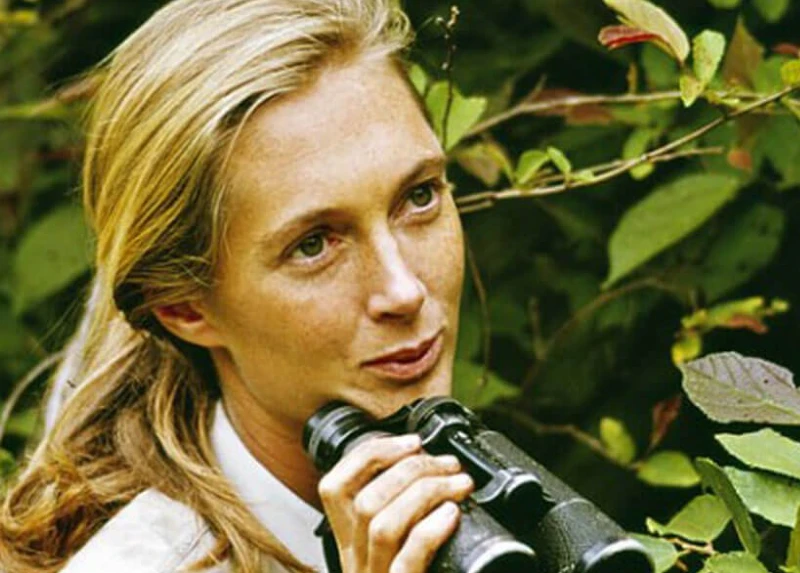
Jane Goodall, the woman who turned her love for primates into a mission to conserve nature, died at the age of 91, on 1st October, leaving behind a legacy to be remembered in the world of environmentalism and scientific research.
The Jane Goodall Institute said that she died due to natural causes. The statement released by the institute talked about her journey and contribution to ethology and conservation of nature. A former primatologist turned into a lifelong conservationist, she began her journey from a seaside village in England and moved across the world to understand primates and the role of human beings in their conservation.
Dr Goodall is known for her exemplary work as a woman scientist in the 20th century and her work related to primates. As a woman, she has done some great work and led to the empowerment of women like the late Dian Fossey. One of her most remembered projects was a partnership with the National Geographic Society, which drew the public’s attention to wildlife and brought the chimpanzees to the limelight through TV and magazines.
Changing the scientific norms of the time, she named chimpanzees instead of giving them numbers, and also observed that they have different characteristics and family relations just like humans, and just like humans, they also used tools. In a TED Talk in 2002, she stated that the difference between humans and other animals was not much.
Her career was also notable as a conservationist as he shifted her focus, noticing climate change and urging the world to take action against the devastation of nature. She also received several accolades for her work, including the appointment as a Dame of the British Empire in 2003 and the US Presidential Medal of Freedom in 2025.