



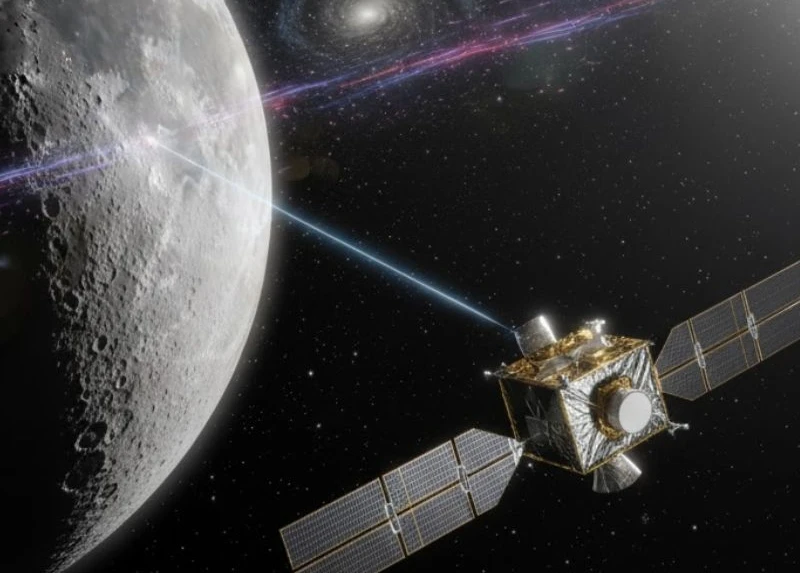
The instrument attached to India’s Chandrayan-2 mission has confirmed the increasing density of molecules in the Exosphere of Earth’s satellite, the Moon. Last year, during the solar event called the Coronal Mass Ejection, the increasing tendency in the moon’s exosphere was observed.
The exosphere of the moon is closer to its surface and is made up of molecules released during solar events, including solar winds, radiation, and meteorite impacts. During the event of a Coronal Mass Ejection (CME), the molecules released by the Sun increase, thereby increasing the density of the exosphere. Since the moon lacks an atmosphere, unlike Earth, it makes it more vulnerable to such events.
The payload of Chandrayan-2, named Chandra’s Atmospheric Composition Explorer-2, detected this phenomenon during the last CME event. This led to a record increase in pressure in the moon’s sunlit exosphere. The study published in Geophysical Research Letters calls this the first such evidence of an increase in density in the moon’s exosphere during a CME. MB Dhanya from Vikram Sarabhai Space Centre is the first author of the study.
This information is crucial as it deepens our understanding of space weather and the moon’s exosphere, which will help in India’s first flight to the satellite in 2040. It can also help us design lunar habitats that can survive in such extreme events.
The researchers involved in the study stated that, other than giving information on the moon’s exosphere and space weather, this finding gives clarity on the challenges involved in building a permanent station on the moon. The paper also predicted that this finding will help scientists study the exosphere of other planetary bodies.