


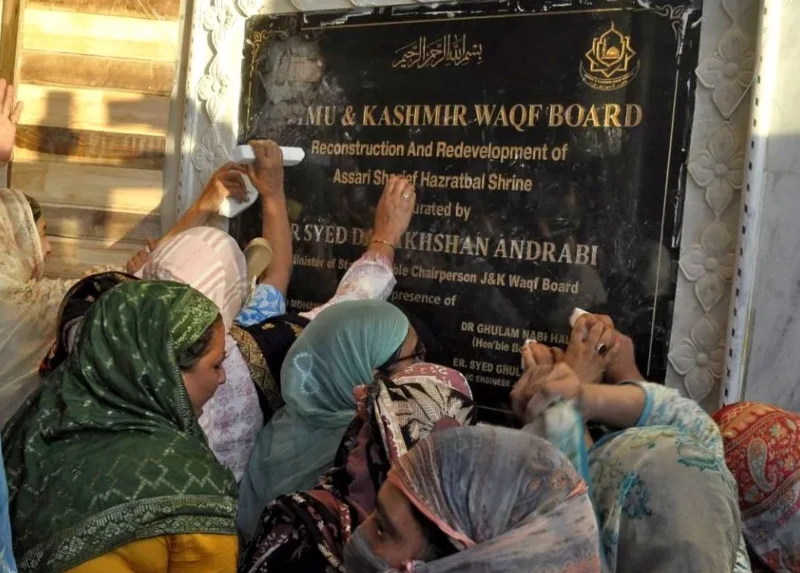
The plaque with the national emblem on it has raised waves of protest and questions in Jammu and Kashmir’s revered Hazratbal shrine, amidst the wave of flooded water and landslides in the valley. The shrine is a major religious place and is known for housing the relics of the Prophet. People who came to offer prayers on Friday have allegedly damaged the plaque on the pretext that symbols are not allowed inside the Mosque compartment.
The issue doesn’t stop here, as the leaders in the valley have alleged that it was the waqf board’s deliberate action to hurt the people’s sentiments. Tanvir Sadiq, the leader of the National Conference and Hazratbal legislator, said that the plaque was against ‘Tawheed’. He shared on his X handle that the presence of an idol is the gravest sin in Islam, as the sacred places reflect the belief of oneness of the Almighty, which is disturbed by the presence of any other object. Darakshan Andrabi, the BJP leader and the vice-chairperson of the waqf board, said that the people protesting against the plaque are terrorists.
She blamed Sadiq for triggering the incident by posting about it on social media. The back and forth between leaders has led to massive protests. Another National Conference MP, Aga Mehdi, said that the people were not wrong in protesting against the plaque as it was completely unacceptable and foolish of the people. Iltija Mufti, the PDP leader, also commented on the incident, saying that the BJP is deliberately labelling the people of Kashmir as ‘terrorists’ and fueling the communal fire.
Srinagar’s former mayor voiced his concern, asking the NC government for action on account of the Waqf’s vice-chairperson, Andrabi. He tweeted that the inauguration of a plaque inside the shrine is against humility and surrender to god, but the government should take action against Andrabi rather than tweeting about it. The statement further said that the waqf is not a place for someone’s personal agenda, despite that the unelected person is heading the board. Without a mandate from the Kashmiri people.