

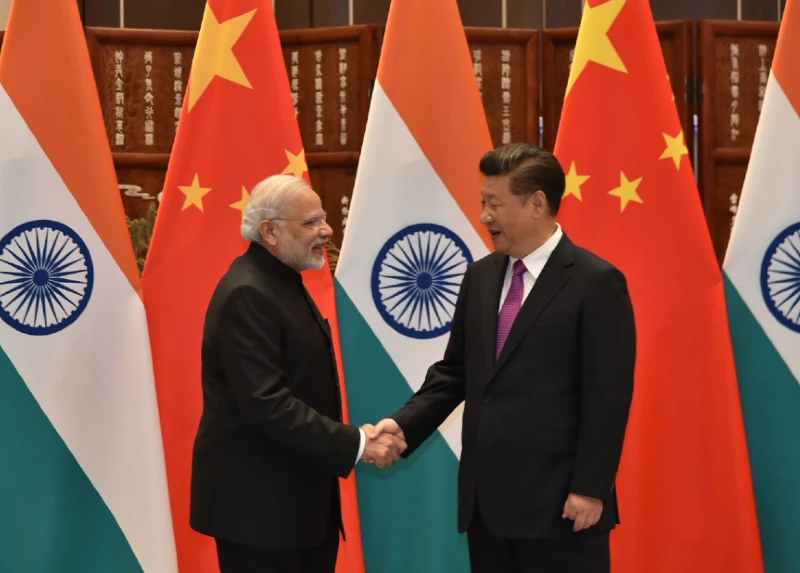
The SCO summit concluded in China on 1st September, has created waves across oceans. The major highlight of the summit was the new partnership between India and China in the backdrop of disturbing relations with the United States. PM Modi’s China visit was significant as it was the first in seven years. Experts, however, say that this tactical relationship between India and China may not be able to reduce the impact of the 50% tariff levied by the US on India. History has been a testament to the strained relations between India and China, and border clashes along with the Pakistan-China relations have made experts question the new partnership.
VK Vijayakumar, the Chief Investment Strategist at Geojit Investments, said that the unresolved dispute on the border and a history of strained relations, including the controversial China-Pakistan Economic Corridor of the Belt and Road Initiative, might act as a major roadblock for cordial relations between Beijing and New Delhi. Vijaykumar also warned that it’s too early to overestimate this partnership, especially in the backdrop of India’s wide deficits with China.
India stands at a 100 billion dollar trade deficit with China due to rising telecom equipment, electronics, Pharmaceuticals and other imports. Another problem is the low-value exports and high-value imports by India. China, on the other hand, has strategically placed itself in the global supply chain, which automatically increases its bargaining power.
Manoranjan Sharma, the Chief Economist at Infomerics Valuation and Ratings, said that this kind of economically imbalanced and strategically sensitive partnership with China can increase supply chain risks for India. Another aspect of this growing relationship that experts point to is the probable fallout of relations with the United States, which might see India’s growing proximity to China as against its interests in the Indo-Pacific.
The wider consensus is to diversify India’s export and import destinations. Sharma and other industry leaders believe that India’s development and strategic autonomy will be maintained if it deals with other countries, including European countries, Japan, and other Southeast Asian neighbours, even if it comes at a cost. In the backdrop of the latest geopolitical events, it is said that India should look after solving its problems with the US, which is the largest exporter of India and must be careful with its outlook towards China.
Further, it is also reported that the 50 per cent tariff impact will not be compensated by increasing trade with China, while it may help to some extent. With the growing pressure on Trump from the US court, it is also possible that the additional 25 per cent tariff may soon end.