


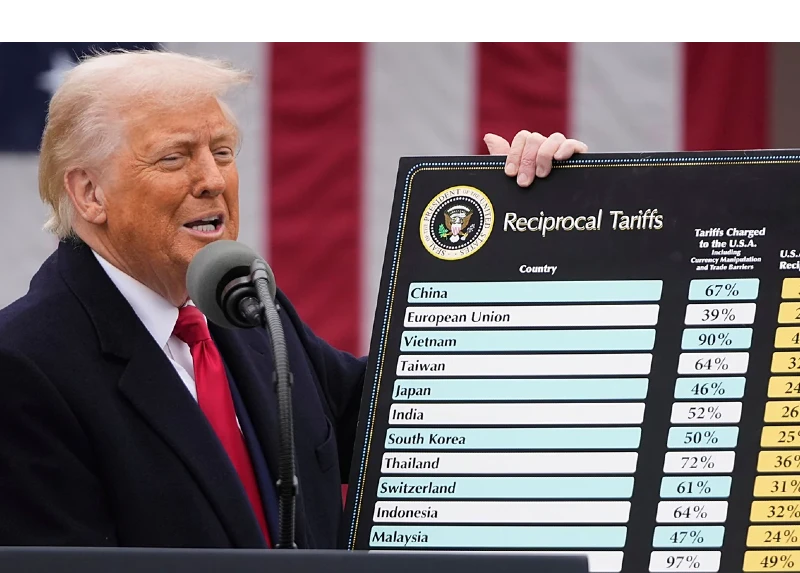
In a 7-4 decision passed by the US Court of Appeals for the Federal Circuit, it is stated that President Trump has exceeded his powers under the controversial International Emergency Economic Powers Act. The judges noted that tariffs fall under the authority of Congress and not the President, and also noted that the President used trade tariffs and fentanyl inflows to justify his policy of broader tariffs. Trump’s 50 per cent tariff on India and Brazil is nonetheless expected to continue till October 14.
The court will take up the case further that month to decide the future of Trump’s tariffs. The federal court’s judgment is viewed as an opportunity for foreign exporters and a possible reduction in tariffs, easing global trade tensions. Asian and Latin American manufacturers have become hopeful and also view this as the court’s first fair check over Trump’s irrational policies. Brazil has already started taking countermeasures against the tariffs imposed since 1st August.
The country launched a 5.6 billion dollar credit support programme, increased export rebates, deferred taxes, and started purchasing farm goods to protect the producers. The beef exporters in Brazil have now diverted exports to Mexico, and the country has moved to the WTO, asking for the imposition of a retaliatory tariff under its Reciprocity law. India, on the other hand, has not announced any direct relief despite its struggling labour-intensive textile and jewellery sector. Due to a lack of targeted efforts, the exporters are facing declining competition and the threat of job losses.
The US president has not budged from his stance, as per his Truth Social post, he has declared that the tariffs are still in effect. He even said that removing it will be disastrous for the American economy, while the reality screams quite the opposite. The impacts of the tariff are expected to be worse on India, and experts from the Global Trade Research Initiative warn that it cannot wait for the pending Supreme Court order and must take direct action. The ruling is scheduled in October and might lead to a historic judgment curtailing the President’s powers.
This gives a ray of hope to many, but the window remains narrow, and the future course of action is still unpredictable.