


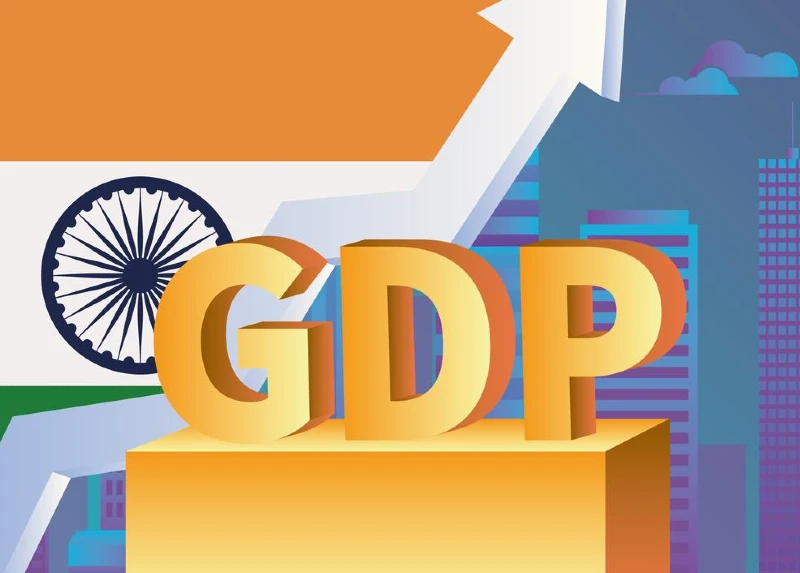
India’s growth figures for the first half of the 2025-2026 FY have been recently released. Though the BJP government and several economists have lauded the numbers, the growth story is half-baked. The GDP growth rate reached a remarkable 8 per cent, according to the latest data.
The Prime Minister also praised the numbers and stated that it was due to the pro-reform and pro-growth policy of the government. The Finance Minister, Nirmala Sitharaman, also called the growth a reflection of fiscal consolidation, while the Commerce Minister, Piyush Goyal, credited ease of doing business and consistency in policy as the major factors behind the achievement.
The optimistic view suggests this pattern is likely to be continued in the third quarter with low GST rates, a high rural and urban demand, and an increase in manufacturing and service sector growth. This picture shows that the economy grew at 8.2 per cent in the June-September quarter of the 2025-26 financial year, maintaining India as the fastest-growing economy in the world.
However, the problem continues if we look at the sectors that employ a wide section of the population, including agriculture, fisheries, and forestry. Data from the Ministry of Statistics show that the sector grew at a mere 3.5 per cent in the second quarter of FY 2025-26. The farmers in India who are still dependent on the monsoon for their success are still not able to get the benefits of the growth.
Inflation is another major problem in India’s growth story, though headline inflation is 4.4 per cent as per the latest data, the actual food inflation was recorded at 6.2 last year to 3.9 this year. Fertiliser subsidies too have risen in FY26 from 1.81 lakh crore to 1.97 lakh crore. This shows that the government cushion is what has kept the farmers and lower sectors alive, but growth remains fragmented.
Hence, the picture is not fully visible if we continue to ignore the villages. The macro-level growth is certainly a good indication, but it must continue with micro pockets that exist in villages.